This week, anyone who follows the world of cinema and video production even loosely will have heard about one thing only: the new Sony FX5, announced on 22 July. Given the attention it's getting right now, I thought it was worth taking a close look — and telling you why, for how I work at your weddings, it changes nothing.
What's genuinely new
I don't want to dismiss it lightly, because the FX5 is a serious camera. Sony has fitted it with an entirely new full-frame sensor, triple base ISO (800, 4000 and 12800) to handle tougher scenes, over 15 stops of claimed dynamic range, and 3:2 open gate recording with internal RAW claimed at 16-bit. On that last point, honestly, I'd like to see solid independent testing first: a bit-depth number on a spec sheet doesn't always translate into a real, visible difference, and it isn't unusual for it to be more of a marketing figure than a practical advantage in the edit. Price: around €5,400 body-only, rising to €6,000 with the XLR handle unit.
A camera built for a film set, not a wedding
There's something that stands out once you look closely at the spec sheet: many of the FX5's headline features speak the language of cinema and advertising, not of a wedding. A 16-bit RAW workflow makes sense when there's dedicated color grading and weeks of post-production behind it; very high frame rates and time for multiple takes make sense on a set that can be stopped and reshot. I film in real time, with no second chances, and what matters to me is a fast, reliable workflow from the shoot to delivery. Not everything that makes a camera extraordinary for a feature film automatically makes it the right choice for telling the story of your day.
Why I'm not switching anyway
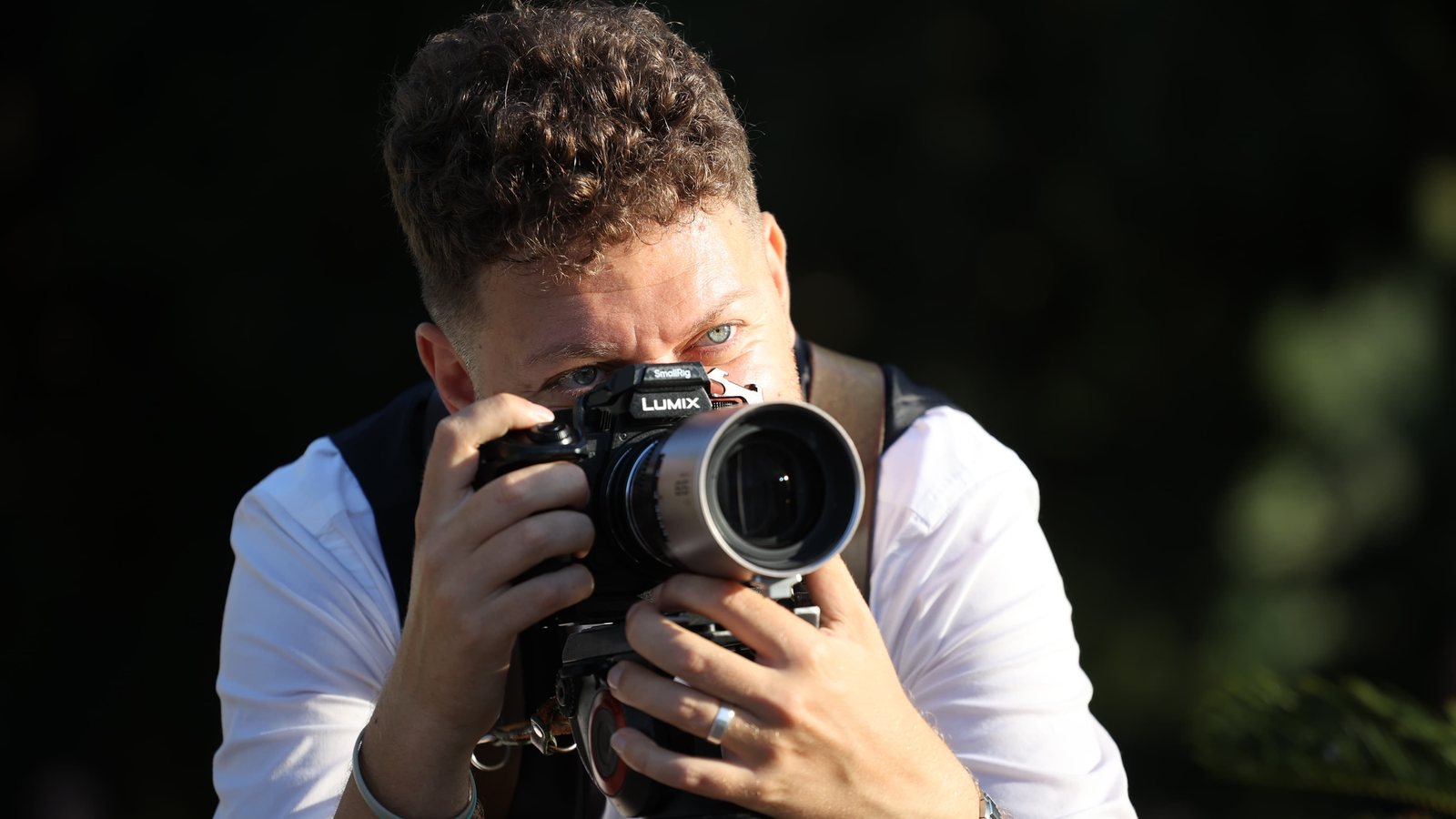
And here's the point many people miss: I moved to Lumix not long ago, and it was precisely thanks to open gate recording — the same feature Sony is now presenting as the FX5's big new thing — that I discovered how well it paired with my Blazar anamorphic lenses. Watching Sony only now chase something my Lumix cameras already give me doesn't make me want to go back. If anything, it confirms the choice I made recently was the right one.
What a spec sheet doesn't tell you
A wedding allows no second takes, and I can't afford to rely on a system I still need to break in, or lenses still to be tested alongside my anamorphics. My Lumix cameras already give me the low-light performance I need every single weekend, the stabilization that lets me move lightly among your guests, and the real kind of certainty — not the spec-sheet kind — of local support that answers even on a Saturday night.
The real cost
There's also a sum that's easy to forget on paper: at a wedding I work with at least two camera bodies, not one. So we're not talking about six thousand euros once, but double that, before even considering lenses and adapters to make the anamorphics work with a different mount. Chasing performance I already have, for how I work, would carry a real cost far higher than it looks at first glance.
What this means for you
In practical terms, this means that on your wedding day I won't be beta-testing a camera released three weeks earlier. You'll keep getting an operator who follows what's new, studies it carefully, but chooses to use it only when it genuinely improves how I tell your story — not because it's new. The best technique is still the kind you never notice.
“The right technique is the kind that disappears, leaving only the emotion.”
Want to know how I'd work at your wedding? Write to me