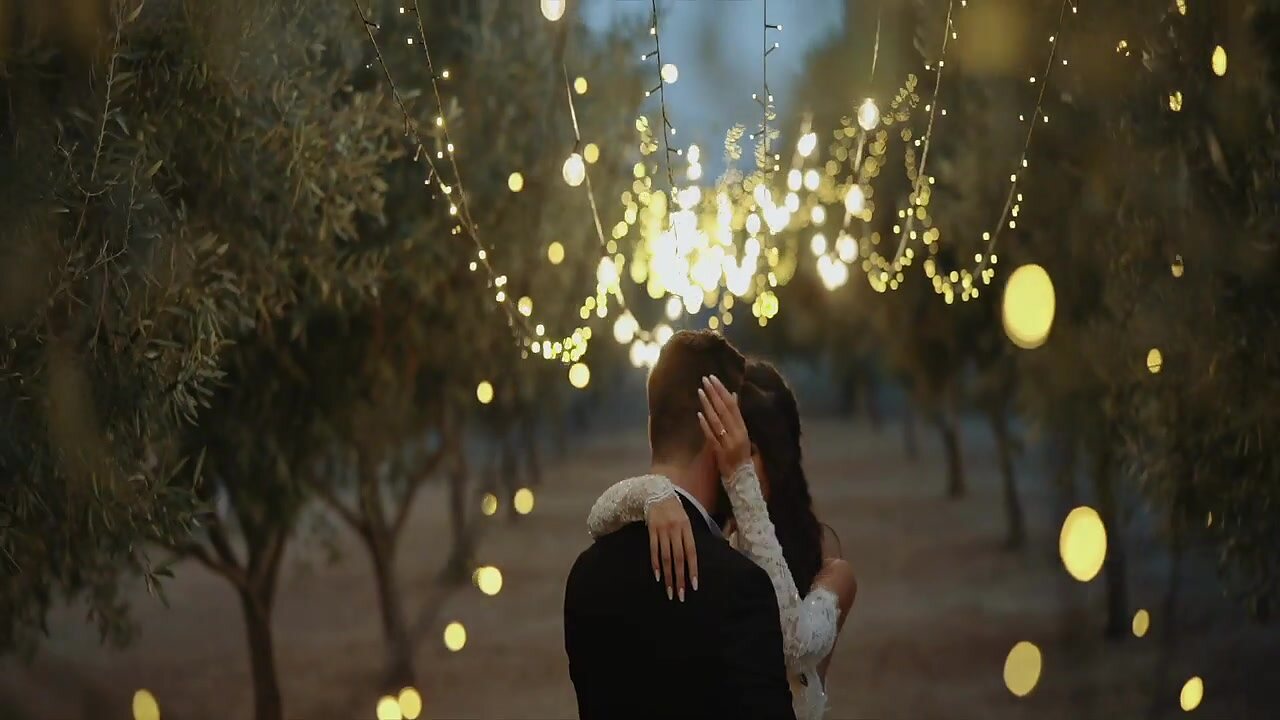
Puglia is the one region in Italy where the architecture lights your wedding for you. Whitewashed lime walls, several meters of them, in full sun: a masseria courtyard is effectively an enormous soft box with the sky as the source. Faces get filled from every direction at once, shadows go transparent, and skin looks the way people hope it looks. Nothing I own reproduces that. I just have to know how to use it, and know the hours when it turns against you.
Puglia has two coasts, and they give opposite light
Start here, because it decides your whole timeline and half the couples who write to me have never thought about it.
The Adriatic side — Bari, Polignano, Ostuni, Otranto — faces east. The sun comes up out of the sea and goes down inland, behind the olive country. The Ionian side — Gallipoli, Porto Cesareo, Santa Maria al Bagno — faces west, and there the sun sets straight into the water.
The heel of Italy is narrow: from Lecce you can be on either coast in about forty minutes. So if a sun going down into the sea is one of the images you want in your film, it is completely achievable — but it probably means being on the other side of the peninsula at that hour, and that is a decision about the shape of your day, not a thing I can improvise at seven in the evening. If your venue is on the Adriatic side, the honest alternative is the one I'd argue for anyway: the last low light through olive trees inland, and then the blue half hour afterwards, which on those white walls is extraordinary and which almost nobody stays outside for.
The masseria and its clock
A masseria is a fortified farm: thick walls, a gate, an internal courtyard, often a church-sized ceiling in the old part and small deep windows. That building gives you four completely different rooms of light across one day, and they arrive on a schedule.
Mid morning, the courtyard is the best place on the property — walls bouncing light around, one wall still in shade to sit someone against. At the top of the day, the whole thing becomes a reflector oven: white on white, the light coming from directly overhead, and it is the least flattering hour a masseria has. Late afternoon, the sun drops below the roofline and the courtyard goes into full shade while the fields outside are still gold, which is exactly when I want you out of the courtyard. And after dark, dinner under strung bulbs against a white wall is one of the most beautiful things in Italian weddings and close to nothing for a camera to work with — which is why I shoot on fast cinema glass instead of hoping, and why I'll ask a question or two about how the lighting is being hung.
Speeches outdoors are an audio problem rather than a picture one. These terraces are open and the wind here is real: a father's voice on a camera microphone, across a courtyard, with a breeze coming over a wall, is unusable. Audio gets recorded on its own tracks, at the source, in 32-bit float. It is invisible work and it is the work you'll care most about in ten years.
About the olive trees, honestly
Couples arrive with a picture in their heads of endless silver olive groves, because that is the Puglia in every magazine. In much of the region it is still exactly that, and driving through the Valle d'Itria at the end of the day is one of the great sights in Italy.
But in parts of Salento it isn't. A bacterium, Xylella fastidiosa, has killed a very large number of olive trees in the south of the region over the last decade, and there are stretches of road where the groves are standing dead wood. It is genuinely sad and it's local knowledge worth having, because a plan built around "we'll shoot in the olive grove next door" can meet a reality nobody warned you about. This is precisely the sort of thing I go and look at the day before, so that what I promise you exists.
Ostuni, the Valle d'Itria, Alberobello, Polignano
These names are not interchangeable and each one asks something different.
Ostuni is a white town on a hill above the coastal plain — from a distance the best establishing shot in the region, and inside a maze of lanes and steps where a bridal party moves slowly and cars cannot follow. The Valle d'Itria — Locorotondo, Cisternino, Martina Franca — is masseria country, gentler, greener than people expect, and the practical heart of most Puglian weddings. Alberobello and its trulli are unmistakable and genuinely hard to film in: the streets are narrow, the roofs throw hard shadow, whitewash blows out where stone stays dark, and the place is full of visitors at the hours you'd want it. Possible, and worth it, if it's planned rather than attempted. Polignano a Mare gives you cliffs falling into very clear water and the famous restaurant inside a sea cave — a spectacular room which is also dark, echoing and full of the sound of the sea, so both light and audio have to be prepared for rather than discovered.
Heat, and why your ceremony is at seven
In July and August the inland Salento is genuinely hot, and there's a reason local weddings put the ceremony late in the day and the dinner properly into the night. If your date is in high summer, a late start isn't a compromise, it's the correct answer — it also puts your ceremony inside better light than a four o'clock one would get. What it does mean is that everything after dark matters more than usual: the reception is a bigger part of a Puglian film than of a Tuscan one, and the pizzica at one in the morning, when the band has taken over and nobody is thinking about a camera, is often the best material of the night.
Where I'm based, and what the drive costs
My studio is in Reggio Calabria, at the very bottom of the mainland. Salento is a long drive from there — five or six hours — and I'd rather write that down than be vague about it. I do it, and I do it the day before, not on the morning of your wedding. That's the whole point: I arrive with a night's sleep behind me, I stand at your venue at the hour your ceremony will happen, and I watch where the light goes before your day rather than during it.
Over 500 wedding stories told, a documentary approach that doesn't depend on knowing one venue by heart, and that scout the evening before. There are good videographers living in Lecce and Bari, and if one of them turns out to be right for you, that's a fine outcome. Only don't decide on distance — watch the films.
I don't follow trends. I follow what's actually happening in the room.
Every season, wedding films pick up a new look. A color grade everyone copies. A transition everyone uses. A drone move that was startling once and is now on every second film. Three years later those films look dated, and the strange part is that the couple inside them hasn't aged at all — only the fashion wrapped around them has.
I've never been interested in that. What I look for is the emotion in the room, and emotion doesn't go out of style. The second before the doors open. Your father's face when he understands it's actually happening. The two of you at the end of the night, when nobody is filming anymore — except I am.
It also means being honest about who I'm right for. If what you want is the film that looks like the one trending this year, there are people who do that very well and I'll say so happily. My films are for couples who will put it on in fifteen years and feel the same thing in their chest as they did that day. That's a different job, and it's the only one I know how to do.
What you actually receive
A complete 15–20 minute film in 4K Ultra HD, shot with anamorphic cinema lenses, drone coverage where it is permitted, and multi-track live audio recorded in 32-bit float. Documentary approach throughout: no forced poses, no interrupting a moment to repeat it, nothing staged for the camera. If you want your guests to relive the day during the reception itself, a Same Day Edit trailer can be delivered that evening. You can see how different places become different films in the portfolio.
Films made this way took the Grand Award at Filmmaker Global 2024 in Athens, and Best Short Film at the ANV Film Festival in 2025. I'll mention it once and leave it there: it says something about how I work, and nothing yet about your day — which is the part that actually matters.
Planning it from abroad
Most couples I film plan their Italian wedding from another country. For Ostuni, the Valle d'Itria and Lecce the practical airport is Brindisi, which is much closer than people assume — Bari makes sense mainly if your venue is north of Ostuni or your guests get a better connection there. From there it's simple: we meet on a video call, everything is set out in a clear written contract, and I coordinate directly with your planner and your photographer, who I will have spoken to before the day, because a videographer and a photographer who haven't met are two people standing in each other's shots.
Enquiries are welcome in English, by contact form, email or WhatsApp. If you're comparing suppliers from a distance, I've written honestly about how to choose a wedding videographer in Italy and about what a wedding film really costs.
When to marry in Puglia
Late May and June, then the whole of September into early October, when the sea is still warm and the light has gone long and soft. July and August are the busiest and the hottest; they work, with a late timeline. And if you are considering the shoulder season, the region holds its warmth later than most of Italy — an early October wedding in Puglia is a real option in a way that the same date further north is not.
Frequently asked questions
Do you film weddings in Puglia?
Yes. My studio is in Reggio Calabria and Puglia is a long drive rather than a flight — I arrive the day before, scout your venue at the hour your ceremony will happen, and start the day rested.
Can we have the sun setting over the sea?
Yes, but on the Ionian side — Gallipoli, Porto Cesareo, Santa Maria al Bagno. The Adriatic side, including Ostuni, Polignano and Otranto, faces east: there the sun rises out of the sea and sets inland over the olive country. From Lecce either coast is about forty minutes away, so it's a planning decision, not an impossibility.
Which airport should our guests fly into?
Brindisi for Ostuni, the Valle d'Itria and Lecce. Bari if your venue is further north, or if the connection is better for your guests.
Can you fly a drone at a masseria?
In open countryside, usually yes. Over Alberobello, protected sites and busy town centers, no — or only with permission arranged in advance. I check the zone for your specific venue before the day and tell you honestly what's possible.
Our ceremony is at seven in the evening. Is that too late to film?
Not at all — in high summer in Puglia it's the right choice. It puts your ceremony in better light than a mid-afternoon one, and it makes the night part of the day, which suits this region. It does mean the reception carries more of the film, so it's worth talking about how the lighting is being hung.
How far in advance should we book?
I deliberately take on a limited number of weddings each year, and Puglian Saturdays in June and September are reserved early. Write as soon as you have a date and a venue.
The other places couples ask me about
Puglia is usually on a shortlist with one southern alternative and one classic. Here is what each of them actually changes.
- Wedding videographer on Lake Como — the mountain shadow that arrives an hour early, arriving by boat, Bellagio and Varenna.
- Wedding videographer in Tuscany & Florence — villa timelines, the last hour of light over the hills, Val d’Orcia and Chianti.
- Wedding videographer on the Amalfi Coast — Ravello, Positano and Amalfi, the traffic on the SS163, and why distance here is measured in staircases.
- Wedding videographer in Tropea & Calabria — my own coast: Tropea, Capo Vaticano, the Costa degli Dei and Scilla.
- Wedding videographer in Sicily & Taormina — Taormina facing the sunrise instead of the sunset, Etna behind the ceremony, the baroque of Noto and Ortigia.
Marrying somewhere else in Italy — Venice, Rome, Umbria, Lake Garda, the Dolomites? My page on filming weddings across Italy explains how I work when the wedding is far from home, which is most of the time.
Want your film screened before the night is over? See how a same day edit works at an Italian wedding.
“White walls, a courtyard and one long table. Puglia lights your wedding for you — I just have to know the hours.”
Check my availability for your date