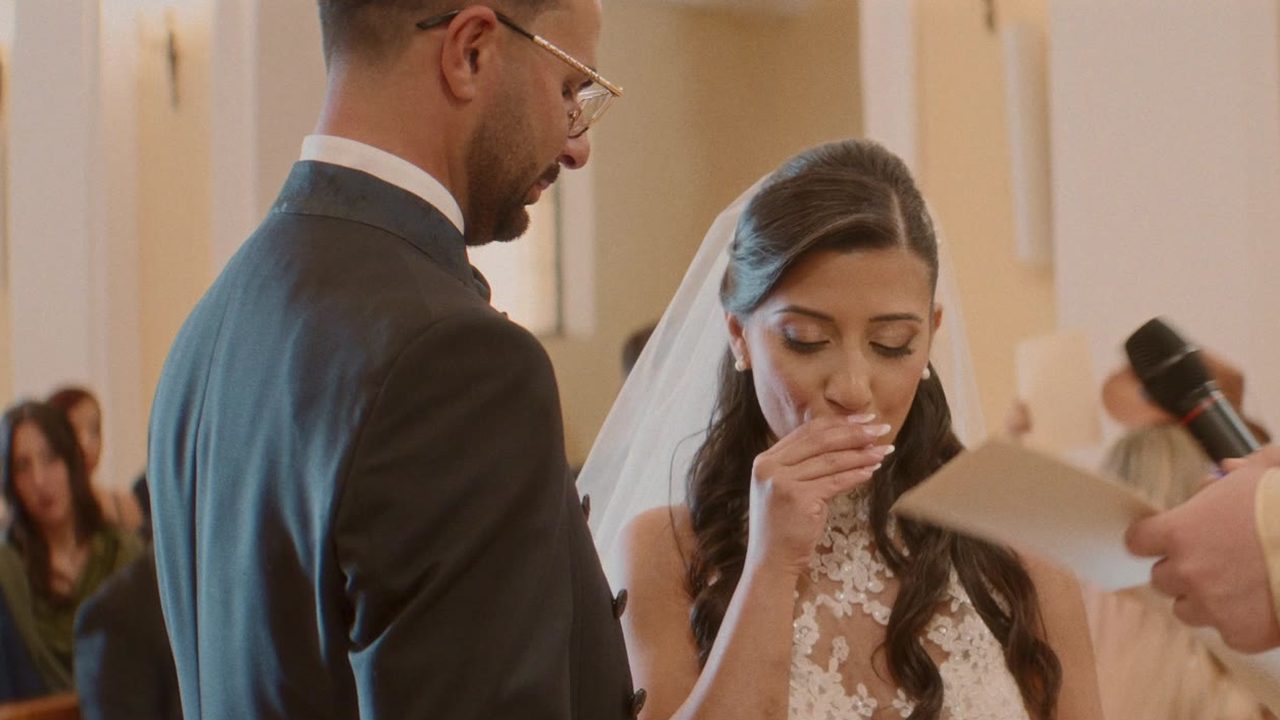
There's something I've learned in fourteen years of telling weddings, something no couple can fully grasp on the day itself: the value of a wedding film isn't measured today. It's measured in ten, twenty years — when everything that seems ordinary today (the people, the voices, the familiar gestures) no longer will be.
On the wedding day, everyone is alive, young, present
On the day of the "yes", the room is full. Grandparents dancing, uncles improvising a toast, lifelong friends sitting where they've always sat, your parents young the way you've always seen them. In that moment it seems impossible that anything could change: happiness has this trait — it convinces everyone it will last like this forever. But time, with its silent slowness, changes everything. People age, move away, drift apart. And sometimes, sadly, they're no longer here. I don't say this to bring melancholy into an article about weddings: I say it because this is exactly where a wedding film stops being an "extra service" and reveals its true nature. That day, without realizing it, you gathered every person of your life in one room. It will never happen again with that completeness. A film is the only way to keep that room whole.
There's also a paradox few consider: of everyone present, the couple sees the least of their own wedding. The day races, everyone wants to embrace you, entire moments happen behind your back, in another room, at another table. The film isn't only for remembering what you lived: it lets you see, for the first time, everything you missed while you were — rightly — at the center of it all.
The voices that remain
A photograph preserves a face, and does it magnificently. But it's the voice — the way of laughing, the exact intonation of an improvised speech, the way one particular person said your name — that a photo can never give back. And the voice is precisely what memory lets go of first. You remember what someone used to say; you forget how they said it. This is why I give so much weight to live audio in my work: the vows word for word, the speeches in full, the real laughter. More than once I've seen couples return to their film years later not to see the dress or the styling again, but to hear, one more time, the voice of a grandfather who was no longer there. In those moments a wedding film stops being "photography in motion" and becomes something much closer to a family heirloom.
A film isn't watched only once
A wedding film is not a memory you consult; it's a ritual you repeat. You re-watch it on your first anniversary and laugh at the same moments. You re-watch it when children arrive — and at some point they are the ones asking to see it: their parents young, the grandparents dancing, the great-grandparents' house as it was. Sometimes you re-watch it on an ordinary evening, for no occasion, simply because it was needed. And every time you notice something new: a missed gesture, a look at the back of the room, a detail that meant nothing ten years ago and now means everything. That's why the film must be built to last: not an endless archive of everything that happened, but a 15–20 minute story crafted in every passage, that invites re-watching.
Why time, paradoxically, raises the value of that day
Every other purchase of the wedding is worth its maximum on the day itself and then declines. The film works the other way: the more time passes, the more it holds that nothing else holds. For couples who marry in Italy from far away, this is doubly true — that room full of people who crossed the world for you may truly never gather again. It deserves to be kept whole.
If you want to see how I try to honor all this, the portfolio is open. And if you'd like to talk about your day, write to me.
“One day, this film will be the most precious thing you own from that day.”
Tell me about your day — check my availability