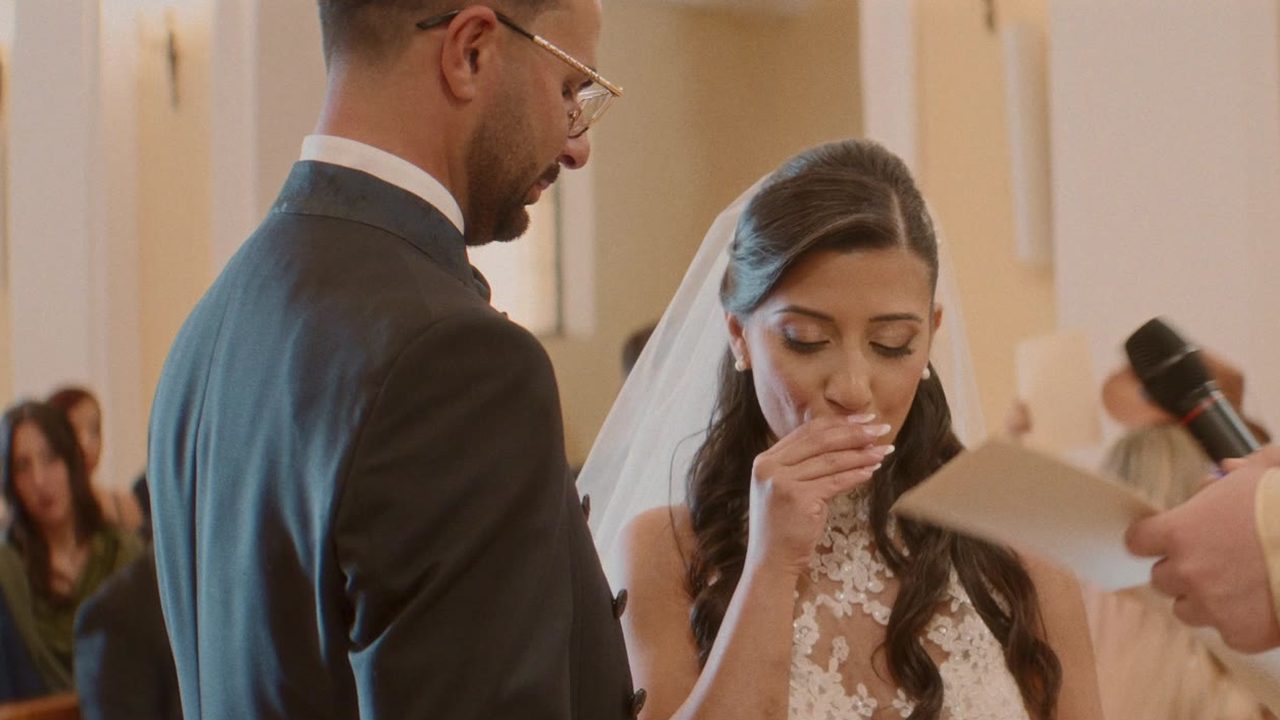
In April 2024 I took a wedding film to Athens. The judging was anonymous, which meant nobody in the room knew whose work they were watching. This is what happened, and what a book published two years later said about it.
A festival that did not want to be a competition
The first edition of the Filmmaker Global International Festival and Conference ran for three days at Cinema Mikrokosmos in Athens. It was founded by Kostas Petsas of Cinema of Poetry together with the Italian filmmaker Daniele Donati, who wanted something other than another industry contest: a place where videographers from different countries could actually exchange knowledge.
More than forty official selections were projected onto the cinema screen. Because the filmmakers' identities were concealed during judging, no reputation travelled with any film. Each one had to meet the audience on its own terms.
I brought Cuore a Tremila.
The film is not polished, and that was the decision
When the couple speak in Cuore a Tremila, I kept the hesitations. The breaths. The pauses between sentences where nothing happens and a person is simply thinking. The opening track is dry. There is no slow-motion entrance and no colour grade built to make the day resemble a perfume advertisement.
What I kept instead was the place: wind moving through dry olive groves, tyres on a dirt road, the ordinary sound of the room the couple were sitting in.
I did not know whether any of that would survive a cinema screen with forty other films around it. Most of those films were technically flawless, and several were more beautiful than mine.
What happened
Riccardo Fasoli called me onstage for the Best Storytelling Award. Later, Daniele Donati and Kostas Petsas presented the Grand Award — best film of the festival overall — to the same film.
I was in tears, and I am not going to pretend otherwise: it is written in the festival's own account of the ceremony.
Later that year Cuore a Tremila also won Grand Jury Choice — Best Wedding Film at the FFTG Awards, with two further nominations for Best Music and Best Story.
The chapter I did not expect
Aaron Daniel hosted the ceremony in Athens. In July 2026 he published Video Authorship: The 12 Laws of Video Creation in the Age of Endless Content.
In the chapter on refusing kitsch, he describes watching hours of immaculate, professionally made films that slowly began to blur into one another — and then writes that Cuore a Tremila "came onto the screen and changed the room."1
I want to say plainly that I am grateful to Aaron, and that my respect for him has nothing to do with the fact that he wrote about my work. The chapter put into words something I had been doing by instinct for years without being able to explain it: that technique belongs in a film only when removing it would make the scene less truthful.
1 Aaron Daniel, Video Authorship: The 12 Laws of Video Creation in the Age of Endless Content, first edition, 2026, p. 176. The book is available here.
What an award actually tells you
If you are choosing a filmmaker for your wedding, an award is not a promise that your film will be beautiful. There were many beautiful films in that room, made by people whose work I admire.
What the award says is narrower, and more useful to you than a trophy: when a jury could not see who had made the film, they responded to a couple who had been allowed to sound like themselves.
So it is worth being honest about the trade. If you want a film in which you are smoothed into the same bride and the same groom that every other wedding film uses, I am the wrong choice. If you want to still recognise yourselves in ten years — the real voices, the real pauses, the place as it actually sounded — that is the entire method, and it is what those juries were responding to.
You can watch Cuore a Tremila in the portfolio, or write to me if you are planning a wedding in Italy.